Thursday, May 14
4:00pm to 5:30pmHUB, 214
Seattle WA 98105
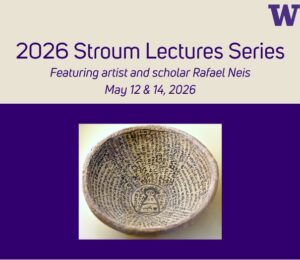
Walk through the ancient Mediterranean and Middle East, and you would have been surrounded by images of all kinds—human figures, animals, hybrids, and creatures that blur the line between the familiar and the fantastic. These images appeared everywhere: in streets and homes, bathhouses and synagogues, public buildings and sacred spaces. Art historians have traditionally taken upon themselves the role of assigning gender or species designations to such images in ways that replicate modern gender and sexuality concepts (especially of “male” and “female” or “masculine” and “feminine”). In this talk, Professor Rafael Neis explores a handful of examples from late ancient Jewish art in the Roman Galilee and Sasanian Iraq. Instead of sorting these images into boxes like “human,” “animal,” or “hybrid,” or even “male,” “female,” and “queer,” they invite us to see the complex ways in which ancient artists and communities imagined species, divinity, and gender. The result is an account of ancient Jewish visual culture that offers a more expansive representation of kinship, difference, and the sacred.
This is part of the lecture series with the Stroum Center for Jewish Studies. This is not a Jconnect event.